BUXTON: Sympathy for the Devil
It wasn't supposed to be like this. It wasn't supposed to all come undone. This was the year it all came good. This was the time for celebration and glory. But it won't be. The golden goose is stuffed and in the oven. Stick a fork in her, she's almost done.
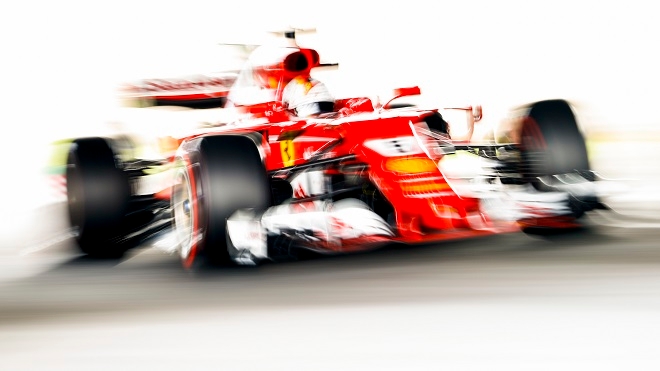
There seems little doubt now that Ferrari will miss out on both Formula 1 World Championships in 2017. Their stated aim had always been the Constructors' trophy, but such was their policy toward their second driver that they lost a realistic shot at outscoring Mercedes a long time ago. In the past six weeks, the headline-grabbing Drivers' title has all but slipped from their grasp, too. Truly, this season will go down as the Scuderia's annus horribilis. It will hurt the fans. It will hurt the team. And it will cost some their jobs.
It had all looked so good, of course. Winter testing had been impressive and promising. Ah, we all said, we've seen that before. But when Australia came around, the pace remained. The car was fast. This time round there was no flattering deceit. The winter times showed themselves to be a warning, not the false dawn they had so often proven to be. This was it.
As the year went on, it became clear that while Mercedes had created a quick but awkward "diva," Ferrari had at their disposal a car for all courses. No matter the track layout, the heat or the weather, it was the red cars that showed themselves to be the ones to beat. Red Bull were floundering. Mercedes were yo-yoing. And Mattia Binotto had created their superior. In almost every area.
But Ferrari has thrown away their biggest chance in a decade.
It's not the making of a moment, of course. The roots of this failure were set in motion years ago and as with most Italian tragedies are inexorably linked with politics and ego.
It seems astonishing to think that it has been a decade since Ferrari had a drivers' title, and almost as long a wait for the Constructors' crown. Coming out of the Todt era was always going to be hard but in Stefano Domenicali the team had an erudite racer who understood the sport and the company's politics. A quiet man he may have been but he was a brilliant operator and a man who deserves no ill feeling from the tifosi. Under him there seems little doubt the Scuderia would have continued to fight for championships.
But he was ousted, replaced by Marco Mattiacci, essentially a car salesman whose most notable accomplishment seemed to be the permanent and non-ironic wearing of a pair of Roy Orbison-esque Ray Bans. The appointment of Mattiacci came as Luca di Montezemolo's reign as the overlord of Ferrari came to an end. Mattiacci was in essence the first Sergio Marchionne appointment, and reflected a new direction for the team.
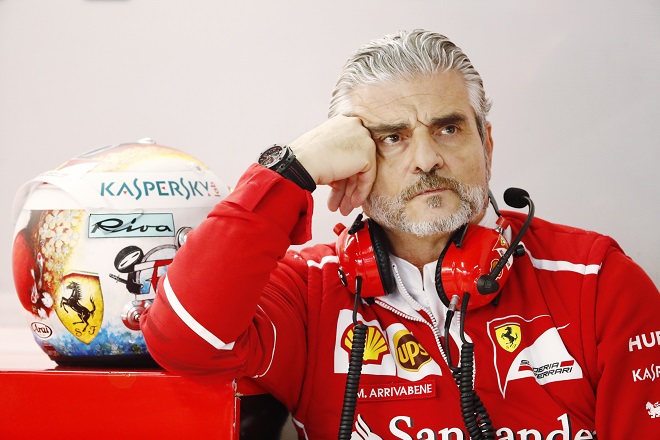
The truth however was that Ferrari was being turned into something far removed from its glory days. From a place of process, structure and racing excellence, the most storied name in motorsport was being turned into a place of chaos, confusion and acrimony.
Many will say that Arrivabene was a puppet for Marchionne, a yes man like Mattiacci before him who simply took his paycheck and followed orders. The truth isn't so black and white. For while Arrivabene undoubtedly operates in the shadow of his absolute boss, his style of leadership and the responsibility for the direction the team has taken is all his.
Arrivabene is loyal to those around him, but possesses an intense paranoia. Almost from the off, the team became increasingly closed. F1 squads are secretive at the best of times, but thick walls were built up around Ferrari in a manner nobody within the sport could remember, less still comprehend.
Speaking to those who know Arrivabene well and have worked closely with him over the previous decades, it is clear to see why and how the Ferrari of today has been created. The Italian only knows one thing, and that is absolute rule by abject fear. His fiery personality and obsessive paranoia create a whirlwind of anxiety and panic, where nothing and nobody is good enough and where everyone is under constant scrutiny and suspicion.
Ferrari's glory days in the 2000s were built on delegated responsibility. Today, the dread and apprehension that has permeated every layer of the team means that people are so busy looking over their shoulder and so focused on keeping out of trouble that they've taken their attention away from the details and allowed simple mistakes to creep in. These small errors, from process and structure to manufacture, have had telling end results.
This swing within the internal atmosphere at the team has led to a shift in the squad's outward appearance and attitude, too.
Ferrari, and its employees, have always had an ego. There's a huge level of pride that comes with pulling on that red shirt. But when that pride and ego are mixed with the fire of cynicism and obsession, they make a potent and unsavoury combination. Under its current management, Ferrari has stopped being a place of harmony and passion and is instead now a seat of hostility. Those bedecked in red push their weight around, physically abusing anyone in their way. People are shoved and thrown, the first instinct of those in the team being to berate and to shout, to snap aggressively.
It's no longer enough to pass it off as arrogance. It is belligerence of such ferocity as to be insulting.
It has even rubbed off on the team's drivers. Kimi Raikkonen was once known as the Iceman, and while most of his radio outbursts maintain a certain carefree nature, even he has been heard brusquely screaming at team members. The same is true of Sebastian Vettel. We all know that he has a tendency toward the petulant, but the manner in which he has gone about his racing in 2017 has, at times, been born not of mild irritation but of pure unbridled anger. Baku was the perfect example of that. How could his frustrations have allowed themselves to bubble up into such unbridled fury?
Because such emotions are the norm at the new Maranello. A team run by fear operates through anger.
Once our sport's most precious jewel, Ferrari is quickly losing its shine.
It has lost control of its narrative, too. The wall of secrecy within which this festering distrust and vile temper has been fed is reflected in the message being portrayed to the world at large for the team has nigh on closed itself off to the media, a strange thing for a team run by a marketing man to do. I have never witnessed anything like it. And people's sympathies have started to run out.
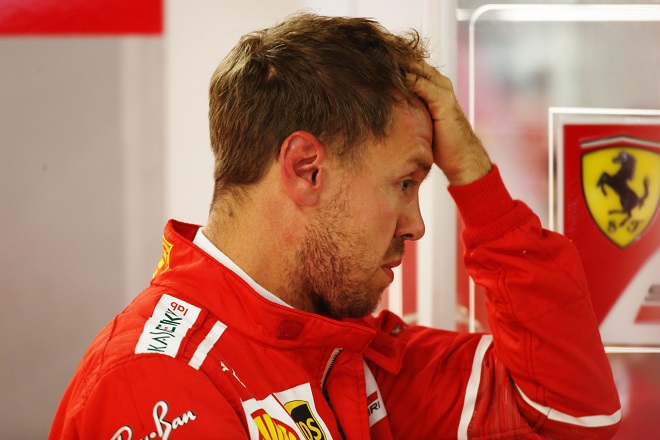
He is still the man thanking every member of the team on the occasion of his retirements. He is still the man thanking the fans. He is the one who refuses to throw the team under the bus, instead taking the burden of responsibility upon himself and refusing to kick his boys when they are down.
In a sea of such swirling antagonism, and despite his own aggression being fed by the bitterness that churns around him, he is the one able to find peace and to raise his head above the noise to attempt to bring calm. He is now the one creating the team's future and giving it direction. He is the one that has taken it upon himself to attempt to heal the divisions created over the past four years of poison.
Rumors have been rife in the Formula 1 paddock all season that, with the 2017 championships wrapped up and returned to Maranello, Maurizio Arrivabene would be thanked for his service and allowed to walk away with his head held high. With any hope of those championships dwindling, it appears his departure will now not be feted in glory, but failure. He's out at the end of the season, whatever happens. That the team has imploded at the moment of potentially its greatest triumph is testament to the manner of his management.
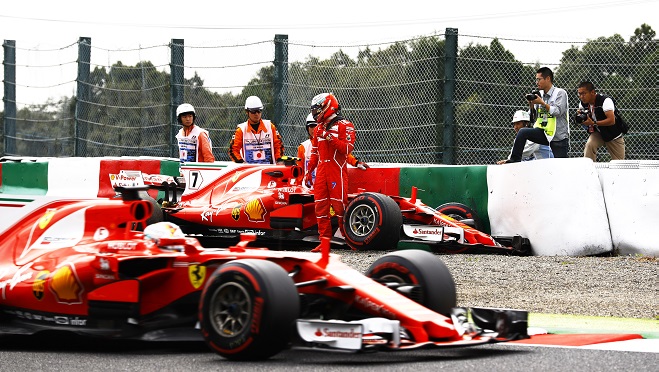
To see the team become a snarling, rabid gang of thugs under the eye of their lupine team principal has been a tragedy. One can only hope that the mistakes of the previous years have been witnessed and understood and that, should a new team principal be appointed next year, whomever Marchoinne places in control returns calm, structure and confidence to the Scuderia.
Enzo Ferrari once said that racing cars were neither beautiful nor ugly, but became beautiful when they won. Does the same ring true for racing teams?
This should have been Ferrari's greatest year in a decade. Instead it has brought into stark relief the very worst facets of what the team that defines this sport has become and the ugliness that has permeated its soul.
Win or lose, one can only pray that Ferrari soon finds again the beauty and grace which was at one time its hallmark.

Latest News
Comments
Comments are disabled until you accept Social Networking Cookies. Update cookie preferences
If the dialog doesn't appear, ad-blockers are often the cause; try disabling yours or see our Social Features Support.